
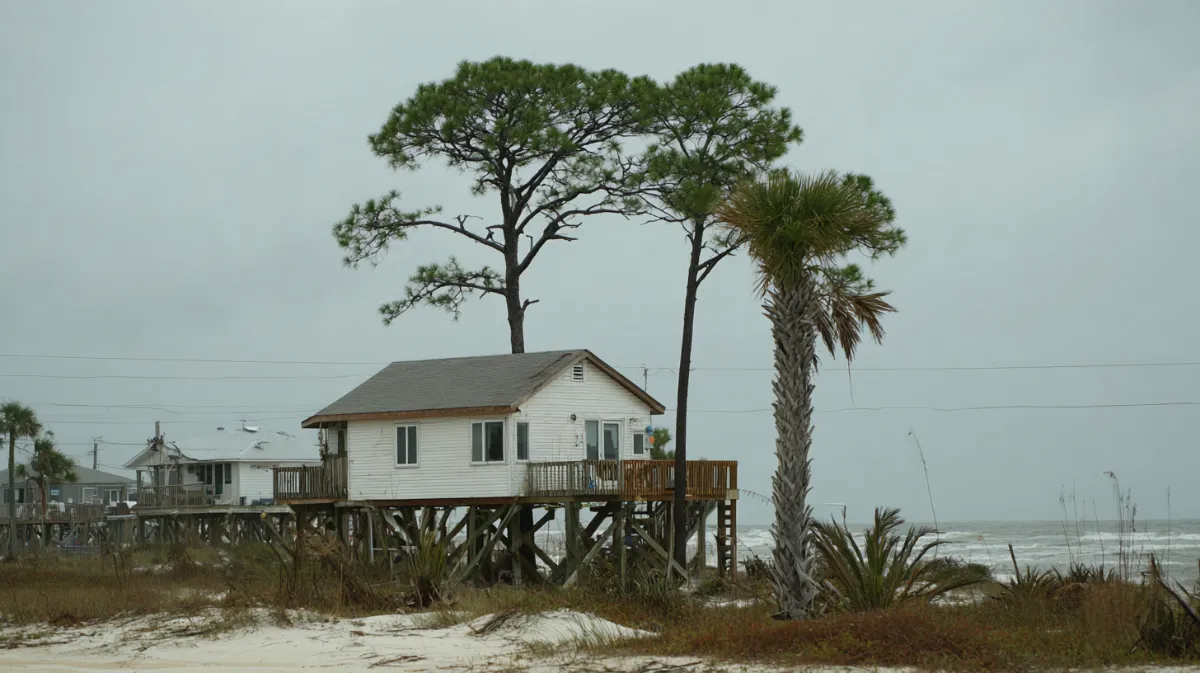
Gulf Shores has been the landfall point for two of the worst storms this coast has seen since 2004, Ivan that year and Sally in 2020, and the trees here show it. Pines that survived have twisted, broken-off tops. Live oaks lean away from the water from decades of wind. On the mainland side of the Intracoastal, newer neighborhoods sit among slash and loblolly pines that were left standing when the lots were cleared. Sandy soil drains fast, which pines like, but it gives roots less to grip, so a tall pine that looks solid can still go over when a storm soaks the ground and pushes on it for hours.
We handle tree removal and emergency storm tree removal across Gulf Shores, from the beach roads to the subdivisions along Highway 59 and Fort Morgan Road. Many of our calls come from owners of rental homes who need a tree dealt with between guests. Call for a free estimate.
Salt, Sand and Wind on Coastal Trees
Trees near the Gulf live under constant stress. Salt spray burns leaves and needles on the side facing the water, and over time the canopy grows lopsided away from it. Sandy soil holds little water in a dry spell, and then holds too much after a week of tropical rain. Add years of storm wind, and you get trees with hidden cracks, rot where old limbs broke off, and roots that never spread as wide as they would inland.
That doesn't mean every coastal tree has to go. Many live oaks here are tougher than they look, and a careful trim to take weight off the long limbs on the land side can balance a lopsided crown. Pines with broken tops are a different story: rot usually moves down from the break, and those trees tend to fail in the next storm. We'll tell you which ones are worth keeping. Owners a few miles east in Orange Beach see the same pattern.
Rental Homes and Second Homes
A lot of Gulf Shores houses are rentals or second homes, and the owners often aren't here when a tree starts to fail or comes down. A property manager notices a pine leaning over the pool, or a guest reports a limb on the roof after a thunderstorm, and the owner is a few states away.
We can handle those jobs without you being on site. Send photos and the address, and we'll look at the tree, send you the estimate and photos of what we see, and schedule the work between bookings if needed. When it's done, you get photos of the finished yard. For trees down after a storm, we document the damage the same way for your insurance claim. If several trees on the lot need attention, it's often cheaper to handle them in one visit, along with stump grinding so the yard looks finished for guests.
Common Questions
Yes. Most of our work on rental homes happens with the owner a long way off. Send us the address, photos of the tree and the gate code or lockbox details, and we'll look at it and send you the estimate by email or text. Once you approve, we schedule around your bookings, do the work and send photos of the finished job. Your property manager can meet us instead of you if that's easier.
Only the ones that are actually a risk. A healthy pine with a full green crown and no lean usually rides out storms better than people expect. The ones to deal with before June are pines with dead or broken tops, needles browning from the top down, a lean toward the house, or a trunk standing alone after the trees around it were cleared. We'll walk the lot and point out which trees are a real problem and which ones are fine.