
A stump left behind after a removal becomes its own problem. You mow around it for years, the kids trip on it, and a pine stump left in the ground can draw termites and beetles while it rots. Old stumps also sprout: water oaks and sweetgums push up suckers all around the old trunk, and you'll be cutting them back every summer. On bigger lots out toward Robertsdale, we often grind a dozen stumps in a day from land that was cleared years ago and never finished. In town, it's more often a single stump in the front yard where a big oak came down in a storm, sitting there because the crew that removed the tree didn't grind. Either way, a few hours with a grinder turns it back into usable ground.
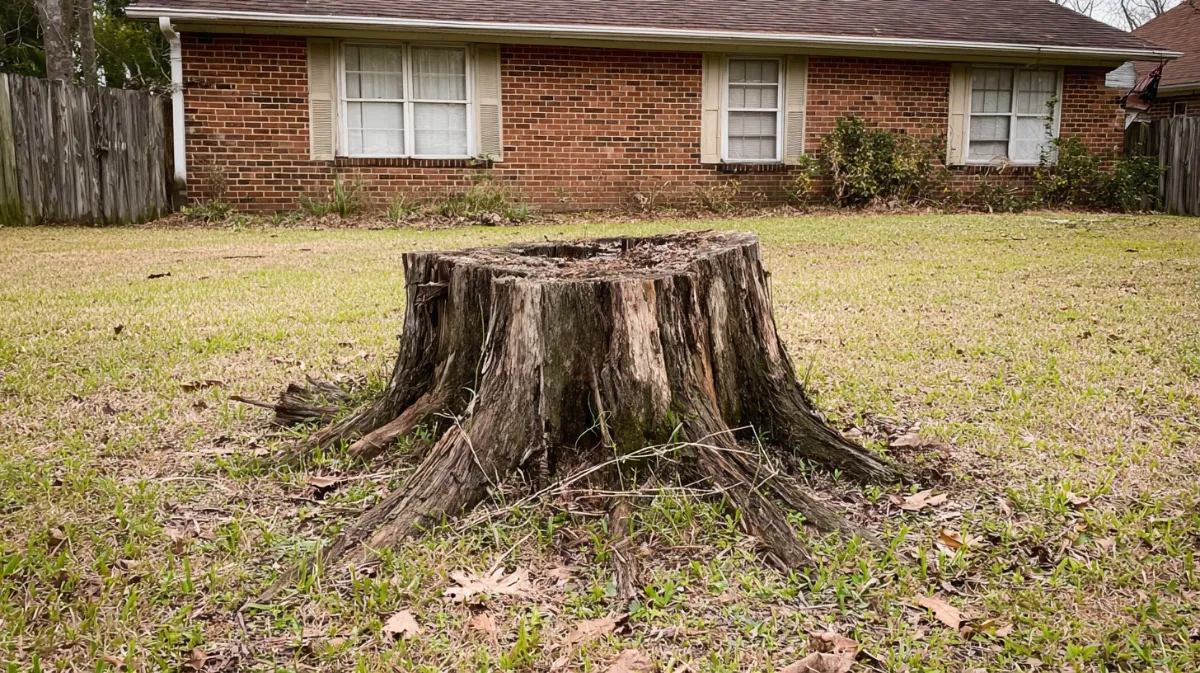
This page walks through when grinding is the right call, how the grinding actually works, what happens on the day, and how we handle older stumps and stumps left by someone else. Grinding is usually quicker and costs less than people expect. If the tree is still standing, we can take care of it and the stump in one visit through tree removal.
When a Stump Should Go
Grinding makes sense whenever the stump is in the way of something: mowing, a new bed, a fence line, a driveway or a slab. It's also worth doing when a stump is sprouting, when it's soft and drawing insects close to the house, or when you're selling and want the yard to look finished.
If a stump is far back in a wooded area and nobody walks there, leaving it is fine. Pine stumps break down faster in our heat and humidity than they would up north, though a big one can still take many years to rot away completely. Hardwood stumps like oak take longer, and while they rot they keep feeding fungus that can spread through the roots to other trees nearby. If you want to replant where the old tree stood, grinding is the better start; otherwise you're digging around old wood and roots.
How Stump Grinding Works
A stump grinder is a machine with a heavy spinning wheel set with carbide teeth. The operator sweeps it back and forth across the stump, shaving the wood into chips a little at a time, then lowers it and goes again until the stump is gone below the soil.
We typically grind 6 to 12 inches below grade, which is deep enough to mow, lay sod or plant flowers over. If you're putting in a new tree, a slab or a fence post in that exact spot, tell us and we'll go deeper. The big surface roots running off the stump get ground out too, as far as you need. Smaller machines fit through a 36-inch gate, so backyards with no truck access are rarely a problem.
What Happens on the Day
- Before any grinding, we call Alabama 811 so buried utility lines are marked, and we ask you about sprinkler lines or a septic field near the stump.
- We cut the stump down close to the ground with a chainsaw if it's tall.
- The grinder takes it down below the soil, roots included where they're in the way.
- We rake the chips back into the hole, or haul them off if you'd rather fill it with topsoil.
- The area gets raked and blown off.
A single average stump takes under an hour. Large oak stumps or a group of stumps can take most of a morning. The machine is loud but not heavy, so on a dry day it leaves little more than a patch of fresh chips where the stump used to be.
Old Stumps and Stumps Left by Others
A lot of our grinding calls in Baldwin County are for stumps somebody else left behind, from a builder clearing a lot, a storm cleanup crew or a removal done years ago. That's fine. Old, half-rotted stumps actually grind faster than fresh ones.
Stumps from storm-snapped trees can be tricky because there's often a jagged, split trunk left standing several feet high. We cut it down first, then grind. If you're clearing a lot with many stumps, we price by the job instead of per stump, which usually works out cheaper. And if a stump sits right against a foundation, a fence or a slab, we grind away all but a thin shell of wood right at the wall, which then rots out on its own.
If the stump is from a tree that came down in a storm, start with storm tree removal, and we grind stumps up through Bay Minette and the north end of the county.
Frequently Asked Questions
Not if they're found first. We call Alabama 811 before every job so the utility companies mark gas, electric, phone and cable lines, which is free and required by law before digging. Sprinkler lines and low-voltage lighting wires aren't marked by 811, so we ask you where they run and flag them. If a sprinkler line passes right through the stump, we'll grind around it carefully, and it's one of the reasons we look before we price.
We grind a lot of those. Storm stumps are often snapped several feet off the ground with split, splintered wood, so we cut them down flat with a saw first, then grind below the soil like any other stump. If the root ball got pulled up and the stump is lying on its side, we cut it into pieces and haul it, then grind out what's left in the hole and level the ground.
No, as long as we can reach the stumps and you've told us about anything buried nearby, like sprinkler lines or a septic tank. Most customers show us the stumps at the estimate and then leave us to it on the day. Just make sure gates are unlocked and dogs are inside. We'll send you a note or photos when we're done, so you can see the finished spot before you get home.