
When a tree comes down on a house, the first hour matters more than anything after it. Water gets in through the hole, the weight keeps pressing on the rafters, and every gust moves it a little more. After Hurricane Sally came ashore at Gulf Shores in 2020, homeowners from Orange Beach to Bay Minette waited days, sometimes weeks, for someone to get a pine off the roof. Hurricane season runs from June through November here, but plenty of trees also come down in winter fronts and summer thunderstorms that never get a name. A saturated yard after a week of rain is all it takes for a big oak with shallow roots to tip over in a gust nobody saw coming. When it happens, call us first and we'll tell you what's safe to do while we're on the way.
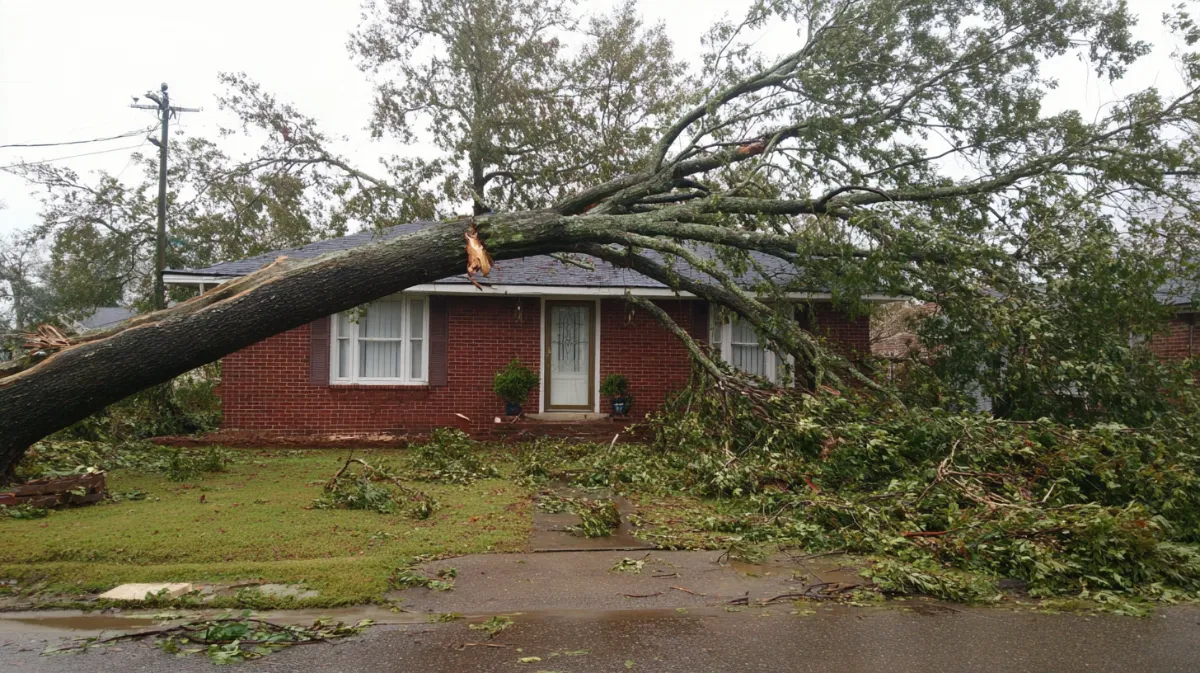
This page covers what to do in the first few minutes, how we take a tree off a roof without causing more damage, how the insurance side usually works, and how to cut the odds of it happening again. If you're reading this with a tree on the house right now, start with the first section. For trees that are still standing but worry you, see tree removal.
What to Do Right After a Tree Falls
First, get everyone out of the rooms under the tree and stay out of them. Then look for power lines. If a line is down or touching the tree, call Alabama Power or Baldwin EMC and keep everyone, pets included, well away; a tree can carry current. If you smell gas, leave the house and call the gas company from outside.
Once it's safe, take photos and video from every angle before anything is moved: the tree, the roof, the inside ceiling, the car. Those pictures are the strongest thing you'll have when you file. Then call your insurance company to open a claim, and call us. Don't climb on the roof or start cutting with a chainsaw. Trees under tension snap back in ways that hurt people every storm season.
How We Take a Tree Off a Roof
A tree lying on a roof is still holding stored energy. Cut it in the wrong place and the trunk can roll, spring up or drop through the decking. So we don't just start cutting. A climber or a bucket operator ties off the limbs and trunk first, then takes the weight off the house in small, controlled pieces, often with a crane holding the main trunk so it lifts straight up instead of sliding.
Once the tree is off, we can cover the opening with a tarp to keep rain out until your roofer gets there. We take the debris all the way to the curb or haul it away, and we clear driveways first so you can get a car out. Trees on cars, fences, pool cages and sheds follow the same approach: weight off first, cutting second.
How Insurance Usually Works After a Storm
Most homeowners policies pay to remove a tree that fell on a covered structure, like the house, a detached garage or a fence, and most cap that removal amount per tree, with a separate cap per storm. The cost of fixing the roof itself is a different part of the claim. A tree that falls in the yard without hitting anything is usually not covered, unless it's blocking the driveway or a ramp you need. Car damage goes through auto insurance, not the homeowners policy.
What helps your claim: photos before work starts, the date and time it fell, and an itemized invoice that separates removal from cleanup. We provide that invoice and our own photos of the damage as the tree comes off. Your policy and your adjuster have the final say, so ask your agent what your caps are before storm season.
Lowering the Odds Next Time
Most trees that fall in a storm were already weak: rot in the trunk, a lean that had been growing, a heavy limb over the roof, or a pine that lost the trees around it to clearing. A walk-around in the spring, before hurricane season, catches most of those. Removing one bad tree costs far less than removing it off a roof, and on your schedule there's no storm-week price or wait.
For healthy trees you want to keep, thinning out a heavy crown lets wind slip through the branches rather than shove the whole crown like a sail. Taking weight off long limbs that reach over the house does the same. Neither one makes a tree storm-proof, but both cut the chance it ends up in your living room.
If your trees are healthy but crowded or heavy, tree trimming and pruning before June is the cheapest storm prep there is, and we serve the whole coast, including Gulf Shores.
Frequently Asked Questions
When a tree is on a house or blocking the only way out, call us any time and leave a message with your address and what happened. We get back to emergency calls first. In the hours after a big storm, the first priority is making the house safe: getting the weight off the roof and covering the opening. Full cleanup can follow a day or two later. Calls about trees down in the yard with nothing damaged get scheduled after the emergencies.
Usually not. Most insurers expect you to prevent further damage, which means getting the tree off the house and the roof covered as soon as it's safe. Take your own photos and video first, open the claim, and let your insurance company know a tree company is coming. Keep the invoice and any photos we take. If you're unsure, a quick call to your agent before work starts settles it.
Pines grow tall and straight with most of their weight in a crown at the top, so in a strong wind the trunk acts like a lever. A healthy pine will usually bend, but one with a hidden defect, old lightning damage, a beetle attack or rot, snaps right at that weak spot. That's why storm debris here is full of pine tops. Pines that look fine but are leaning, bare on top or crowded by other trees are worth having looked at before the season starts.